Explore The Process
Beginning Structural Integration can feel unfamiliar, especially if you’ve never experienced this kind of work before. Below is an overview of how sessions typically unfold, what is expected, and how we approach the process together.
-
We start with a conversation to understand your history, current concerns, and what you’re hoping to explore. This step is as much about fit as it is about information. Not every consultation leads to ongoing work. Readiness and alignment matter for both of us.
-
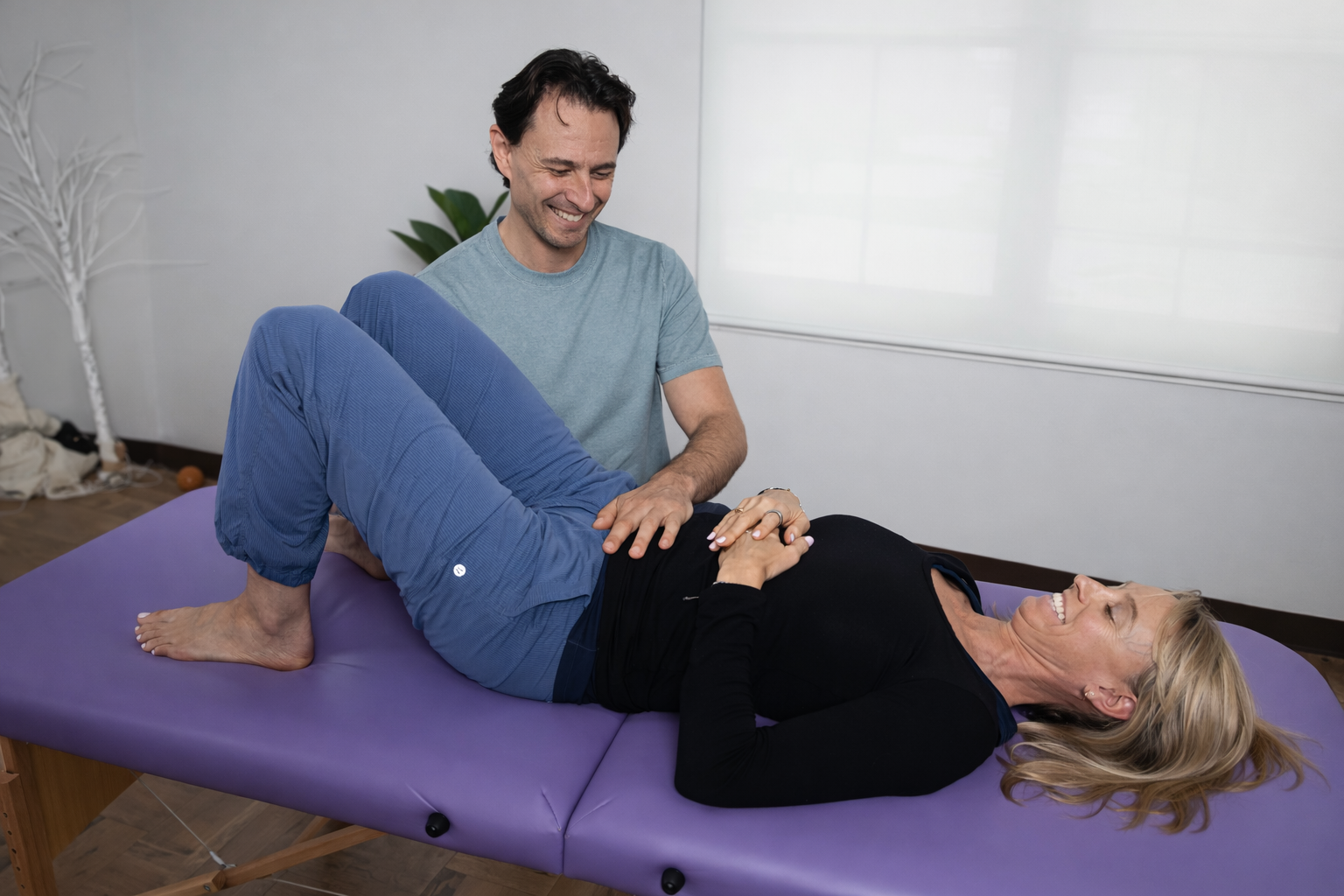
Your first session will be 120 minutes and will focus on observation and hands-on work to establish a baseline. I observe how your body relates to gravity, where effort is being held, and where support may be missing. The goal is not to correct anything, but to begin creating conditions for change.
-
Sessions are interactive and responsive. You’re encouraged to give feedback and ask questions. As sessions continue, the work becomes more specific and layered. We address patterns of restriction, compensation, and disconnection throughout the body, allowing structure to reorganize gradually. Ongoing sessions are scheduled for 90 minutes. Occasionally, time may extend slightly based on the needs of the work.
-
Change often continues to unfold between visits. You may notice shifts in posture, breathing, movement, or awareness.
-
An Anatomy Trains® series traditionally includes 12 sessions, though plans are individualized. After completion of the Structural Integration series, many clients continue with movement integration work. This may include walking refinement, running mechanics, dance-based exploration, or individualized movement coaching. The intention is to integrate structural change into lived movement, so your body continues to evolve beyond the table.
-
In addition to individual sessions, I offer:
Small-group workshops
Practitioner consultations
Educational sessions focused on fascia and movement organization
If you are interested in these offerings, please reach out through the contact page.
Frequently Asked Questions
Explore the FAQ or reach out directly. We can talk through your questions, readiness, and what you’re hoping to explore to see whether this work feels supportive for you right now.
-
Structural Integration is a form of manual therapy that focuses on whole-body organization rather than isolated symptoms.
Massage therapy often emphasizes relaxation and short-term relief. Chiropractic care commonly centers on joint alignment and adjustments. Physical therapy typically targets rehabilitation of specific injuries or conditions.
Structural Integration works more globally, exploring how the body is organized as a system and how patterns of tension, compensation, and movement relate to one another over time. The goal is not correction, but reorganization toward greater ease, balance, and efficiency
-
Sessions can involve strong sensation at times, but the work is collaborative and responsive. Pain is not the goal.
-
Rates
Structural Integration sessions are individualized and typically last approximately 90 minutes. Occasionally, more time may be needed depending on the work.
For those new to Structural Integration, there are two ways to begin:
Body Reading (30 minutes) — $55
A Body Reading is a shorter session focused on observation and conversation.
We will look at posture, movement patterns, and how your body organizes in gravity, along with a discussion of your history and goals. This can be a helpful way to understand whether Structural Integration is the right fit for you before committing to a full session.
Body Readings are also available as a standalone service.
First Session (120 minutes) — $250
The first full session includes both assessment and hands-on work. This session establishes a baseline and begins the process of supporting structural change.
Ongoing Sessions (90 minutes) — $185
Subsequent sessions continue building on previous work, supporting the body’s ability to reorganize toward greater ease, balance, and efficiency.
Teen Sessions (75 minutes) — $125
Shorter sessions are available for teenagers.
Payment
All sessions are self-pay, and payment is due at the time of service.
Payment is accepted via Zelle, Venmo, or check.
Structural Integration is not typically covered by insurance. Receipts can be provided upon request if you choose to submit independently.
-
While there is a “recipe” for Anatomy Trains® Structural Integration, which involves a series of 12 sessions, some individuals may benefit from additional sessions for focused work. All plans are individualized and depend on the person’s needs.
-
In addition to Structural Integration sessions, I offer small-group workshops, practitioner consultations, and educational sessions focused on fascia, movement organization, and embodied biomechanics. These offerings are designed for individuals, movement professionals, and healthcare practitioners interested in deepening their understanding of structure and movement.
-
All new clients begin with an initial consultation to ensure Structural Integration is an appropriate fit and to clarify goals and expectations. Appointments require 24-hour notice for cancellations or rescheduling, and late arrivals will conclude at the scheduled end time to respect other clients. Structural Integration works best when clients can commit time, attention, and open communication throughout the process.
-
No referral is required. You are welcome to book directly. If you are working with other healthcare providers, this work can complement those approaches.
Ros works collaboratively with physical therapists, trainers, movement professionals, and healthcare providers who value thoughtful, whole-body approaches. If you are a practitioner and would like to discuss whether Structural Integration may support a client you’re working with, feel free to reach out.
-
Clients are asked to wear underwear or a sports bra and short shorts, allowing clear observation of posture, movement patterns, and tissue relationships. Less clothing supports more precise and respectful work. Your comfort and consent are always prioritized. If you have questions or concerns about attire, we can discuss them during the initial consultation.
-
The number of sessions varies depending on your goals, history, and how your body responds. Some people notice meaningful shifts within a few sessions, while others benefit from a longer series of work. Structural Integration is a process that supports gradual, lasting change rather than quick fixes. During your initial sessions, we’ll discuss what approach makes sense for you and adjust as your body adapts over time.
-
After completing the Structural Integration series, we can shift toward movement integration work. This may include walking analysis, running form, dance-based movement exploration, or individualized programming designed to support your goals. The structural work creates capacity; movement work helps you embody it.

Tom Myers, Founder of Anatomy Trains
“Many people are natural healers, whether they know it or not. Some people cultivate their healing abilities in one skill or another. Still fewer enter the temple of healing.
My friend, Ros, somewhat to his surprise, but not to mine, is one of those few who finds himself in that sacred but difficult space.
Sacred because healing is always holy. Difficult because when you enter this temple, you must not only change the situation for your clients to stay in business, you must also change yourself to stay in integrity - continually, and not always comfortably.
Ros is an attentive and responsive gentle person. A parent and a refugee, Ros knows the deepest pains and joys of connection and separation. If you come to see this man, you are entering into a partnership with someone who is not all-knowing - who of us is? - but is all in there with you - connecting with your process of unfolding.”